Phone: (512) 447-2112
Address: 2204 Willow St, Austin, Texas, USA
Email: j8blakes88@gmail.com

Description: A curated list of leading healthtech software development companies specializing in diagnostic platforms. Discover teams building secure, scalable healthcare solutions that support smarter clinical decisions worldwide.
Healthcare systems across the world are under unprecedented pressure. Clinics face growing patient volumes, hospitals struggle with fragmented data, and medical teams need faster decisions without sacrificing accuracy. Diagnostics has become the focal point of this challenge as clinicians strive to detect conditions earlier, optimize treatment plans, and reduce avoidable errors — especially in high-stakes areas such as oncology and chronic disease management.
At the same time, the global digital health market — which includes AI-driven diagnostic platforms, telehealth systems, and advanced health analytics — is expanding rapidly. According to leading market research, the digital health market is projected to grow from roughly USD 288 billion in 2024 to nearly USD 946 billion by 2030, exhibiting a robust CAGR of around 22% as technologies mature and adoption widens.
AI and machine learning are playing an increasingly central role in this transformation. In Europe and the U.S., a growing share of healthcare organizations report that AI technologies meaningfully improve the quality of diagnostic decisions, and many clinicians are already comfortable using AI in medical imaging and clinical workflows.
That is why many organizations turn to healthtech software development companies to rethink how diagnostic workflows are built, scaled, and secured. The right technology partner does not promise miracles. Instead, it creates systems that quietly improve outcomes, reduce errors, and support clinicians when it matters most — contributing to faster diagnosis, lower operational costs, and a stronger foundation for value-based care.
Modern diagnostics also depend on reliable operational coordination beyond core clinical systems. From managing the movement of lab samples and medical devices to tracking diagnostic kits across facilities, healthcare providers increasingly rely on software platforms that ensure visibility and accountability throughout the process. Solutions such as parcel management software play a supporting role in this ecosystem by helping organizations monitor deliveries, reduce delays, and maintain chain-of-custody integrity — factors that directly affect diagnostic turnaround times and data reliability.
Below, we explore fifteen agencies that stand out for their ability to build modern diagnostic platforms. The list prioritizes newer, distinctive players and starts with a clear leader.
Key Capabilities
• Advanced data processing architectures for diagnostics
• Scalable health platforms aligned with regulatory standards
• Secure handling of sensitive medical data
• Deep domain expertise in healthcare workflows
Computools takes first place in this ranking due to its ability to translate complex diagnostic requirements into reliable, production-ready digital systems. In healthcare environments where accuracy, trust, and compliance are non-negotiable, the company focuses on clarity rather than hype — a mindset that resonates strongly with providers, medtech innovators, and digital health teams.
Delivering end-to-end healthtech software development services, Computools supports hospitals, telehealth providers, and healthcare startups across the full product lifecycle — from early MVPs to large-scale, interoperable clinical platforms. Their work spans AI-powered diagnostics, remote patient monitoring, telemedicine systems, and integrated patient engagement solutions, all built with regulatory readiness at the core.
Rather than applying generic AI models, Computools works closely with healthcare stakeholders to identify real diagnostic bottlenecks: fragmented data flows, delayed decision-making, manual handoffs, and limited interoperability between systems. This collaborative approach results in diagnostic platforms that integrate seamlessly into existing clinical workflows, reduce operational friction, and support faster, more informed medical decisions without disrupting care delivery.
The company brings strong expertise in secure medical data handling, real-time processing of clinical and device-generated data, and interoperability standards such as HL7 and FHIR. This enables the development of diagnostic systems that can aggregate inputs from EHRs, labs, imaging tools, wearables, and third-party services while maintaining strict compliance with HIPAA, GDPR, FDA, and MDR requirements.
With 20+ delivered healthtech projects and a team of 250+ engineers, Computools demonstrates the delivery maturity required for high-stakes healthcare environments. Their platforms are designed to scale under growing patient volumes, support AI-driven clinical insights, and withstand the security and availability demands of modern healthcare infrastructure.
What ultimately sets Computools apart is its ability to balance innovation with responsibility. By aligning AI capabilities, system architecture, and regulatory constraints into a single, coherent strategy, the company helps healthcare organizations adopt AI-driven diagnostics confidently — improving efficiency, reducing manual effort, and enabling better clinical outcomes without compromising safety or trust.
Key Capabilities
Innowise approaches diagnostic software as part of a broader healthcare ecosystem rather than a standalone product. Their teams focus on building interconnected diagnostic environments where lab systems, EHRs, imaging platforms, and clinical decision tools exchange data securely and predictably.
A strong emphasis is placed on interoperability standards and data pipelines that support fast-growing diagnostic centers and laboratory networks. Innowise helps organizations automate diagnostic workflows without disrupting daily operations, reducing manual data transfers and minimizing the risk of errors. Their compliance-first architecture design allows healthcare providers to scale diagnostics while staying aligned with regulatory requirements from day one.
Key Capabilities
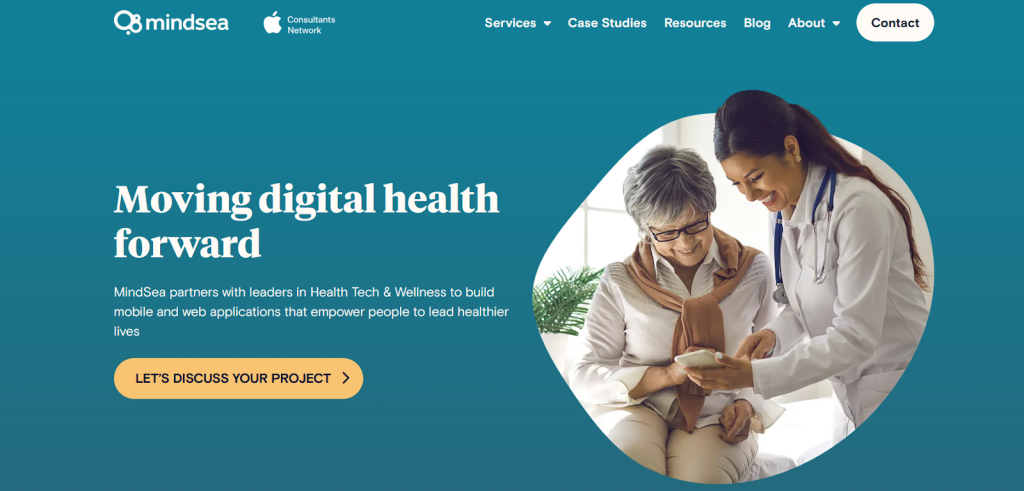
MindSea brings a design-driven perspective to healthcare diagnostics. Their core belief is that diagnostic software fails not because of insufficient technology, but because clinicians are forced to work with unintuitive systems under time pressure.
MindSea works closely with medical professionals to understand real clinical contexts, decision-making speed, and cognitive load. This results in diagnostic interfaces that are clear, responsive, and easy to navigate, particularly in mobile and tablet-based environments. Their solutions are often used in patient-facing and clinician-facing applications where usability directly affects diagnostic accuracy and response times.
Key Capabilities
Eleks applies enterprise software engineering practices to complex healthcare diagnostic systems. The company is particularly strong in modernizing legacy diagnostic platforms that have accumulated technical debt over many years.
Rather than replacing systems abruptly, Eleks focuses on gradual transformation. Their teams rebuild diagnostic infrastructures while keeping existing clinical operations running smoothly. With deep expertise in data security, compliance, and scalable architectures, Eleks helps large healthcare organizations future-proof diagnostic platforms without risking downtime, data loss, or regulatory issues.
Key Capabilities
The Software House specializes in making complex diagnostic data understandable and actionable. Their teams design custom dashboards and visualization tools that help clinicians quickly interpret test results, trends, and anomalies.
By leveraging cloud-based architectures and real-time data processing, their solutions improve collaboration between diagnostic teams, physicians, and decision-makers. The focus is not on raw data volume, but on clarity and speed, enabling faster diagnostic conclusions and better coordination across departments.
Key Capabilities
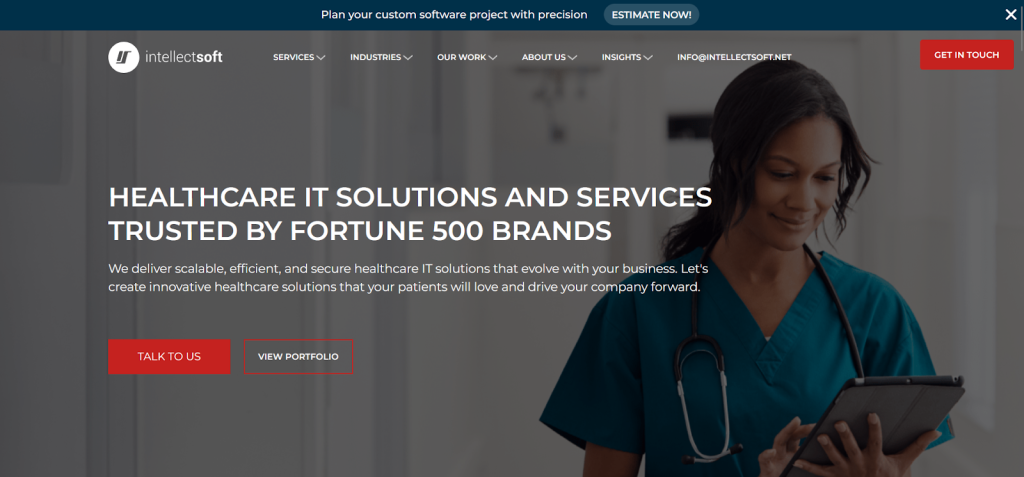
Intellectsoft builds diagnostic platforms with long-term scalability in mind. Their solutions are designed to handle growing volumes of clinical and diagnostic data while maintaining performance, security, and compliance.
The company emphasizes structured data integration across multiple sources, including labs, imaging systems, and third-party healthcare services. By focusing on stability and regulatory alignment, Intellectsoft supports healthcare organizations that plan to expand diagnostic capabilities without constantly reworking their technical foundations.
Key Capabilities
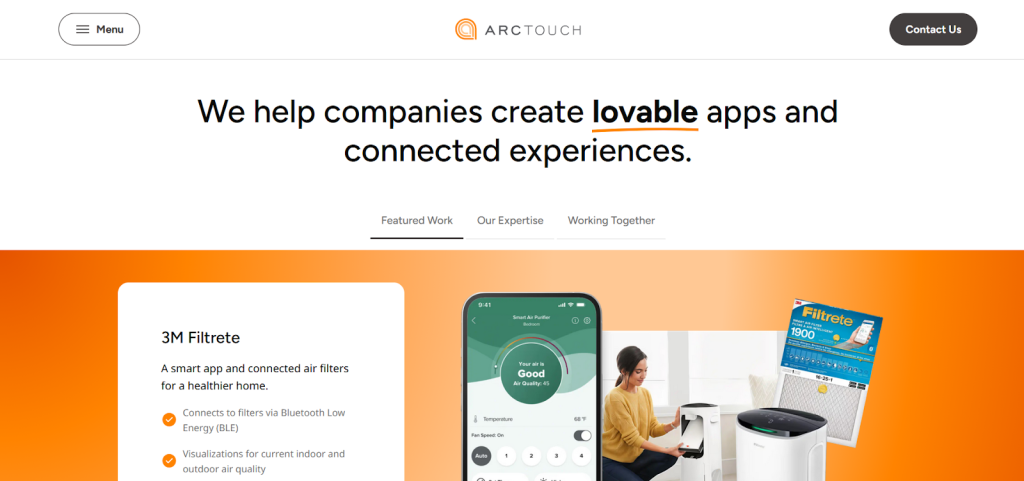
ArcTouch combines UX research with healthcare engineering to bridge the gap between clinical workflows and patient experience. Their diagnostic solutions are often designed for use across web, mobile, and tablet platforms, ensuring consistency for both providers and patients.
A key strength of ArcTouch lies in improving communication around diagnostics. Their systems help patients better understand diagnostic outcomes while enabling providers to deliver insights more efficiently. This patient-centric approach supports higher engagement, clearer follow-ups, and smoother diagnostic journeys across care pathways.
Key Capabilities
Netguru focuses on speed without sacrificing structure. Their agile delivery model allows healthcare organizations to prototype, test, and refine diagnostic tools in short development cycles, reducing the risk of long, inflexible builds.
By leveraging cloud-native architectures, Netguru enables diagnostic platforms to scale alongside growing data volumes and user demand. This approach is particularly effective for organizations that need to validate diagnostic concepts quickly while maintaining technical quality, security, and regulatory alignment.
Key Capabilities
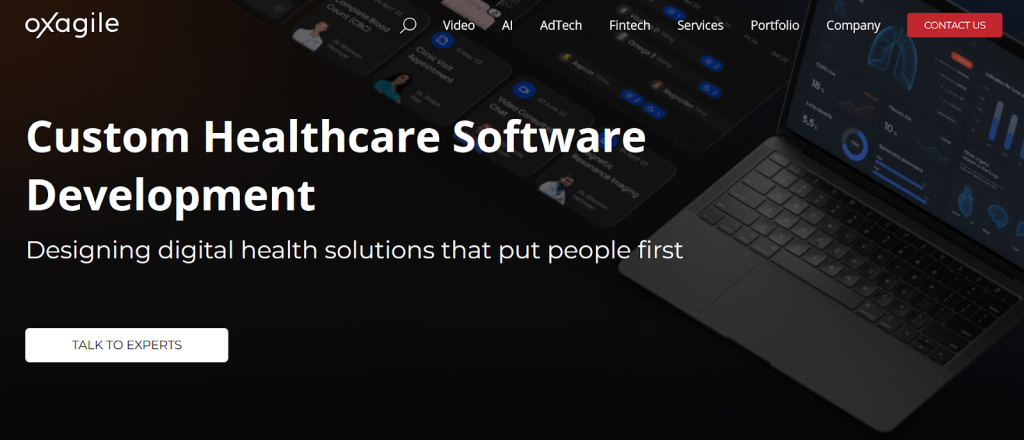
Oxagile specializes in diagnostic systems where visual data plays a central role. Their platforms are frequently used in telemedicine, remote consultations, and diagnostic scenarios that rely on high-quality video, imaging, or real-time visual assessments.
The team brings strong expertise in secure data streaming and video infrastructure, ensuring that diagnostic sessions remain stable and compliant even under high load. Oxagile is a solid choice for providers expanding remote diagnostics without compromising data protection or clinical accuracy.
Key Capabilities
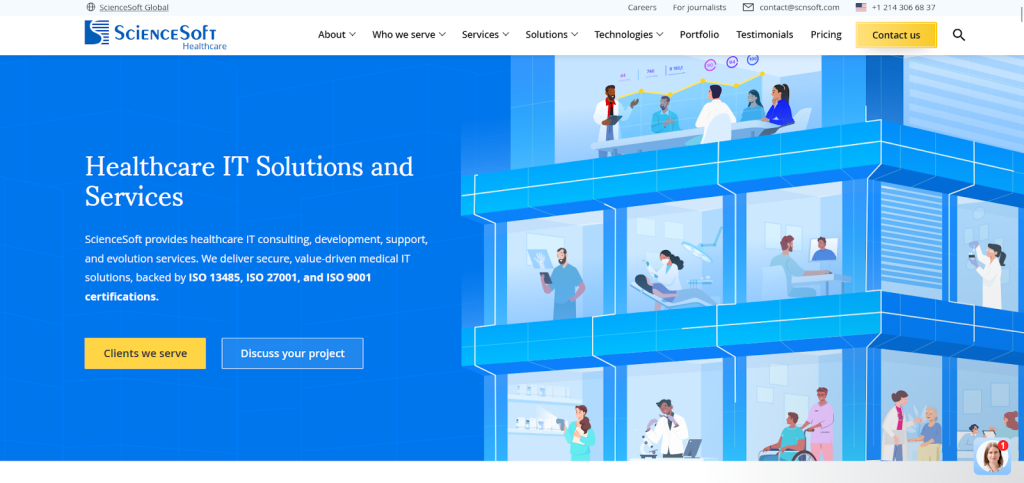
ScienceSoft works with healthcare organizations that prioritize reliability and longevity. Rather than rapid experimentation, their focus is on building and maintaining diagnostic platforms that can operate consistently over many years.
The company often supports diagnostic system audits, compliance assessments, and gradual modernization initiatives. This makes ScienceSoft particularly suitable for hospitals, labs, and enterprises that need dependable systems aligned with regulatory requirements and long-term operational stability.
Key Capabilities
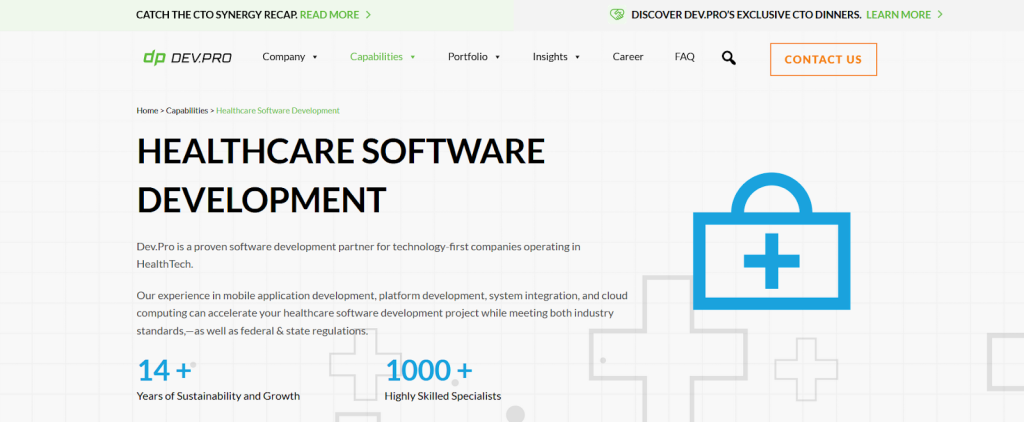
Dev.Pro supports diagnostic teams handling complex data processing and analytics-heavy workflows. Their strength lies in backend engineering, where performance, scalability, and system resilience directly impact diagnostic accuracy and response times.
By integrating custom diagnostic algorithms into secure, high-throughput pipelines, Dev.Pro enables platforms that can process large volumes of clinical data without bottlenecks. Their solutions are well-suited for organizations dealing with advanced analytics, AI-assisted diagnostics, or real-time data ingestion.
Key Capabilities
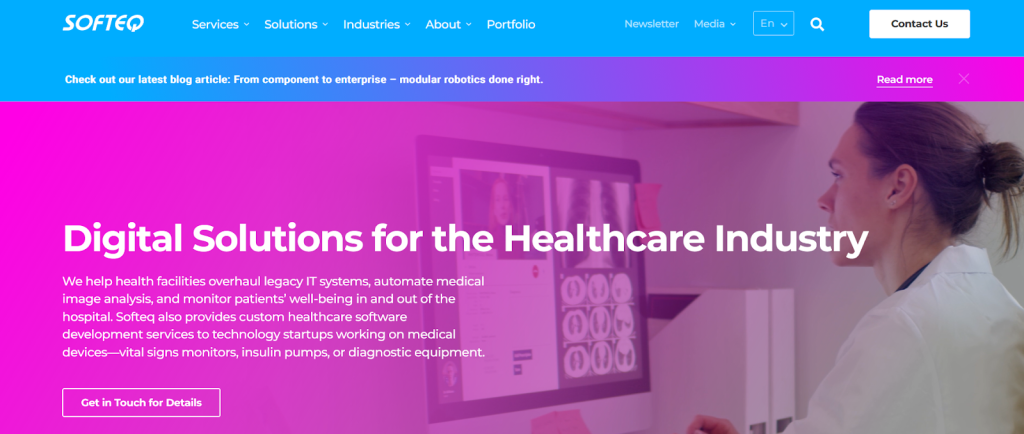
Softeq Health Solutions operates at the intersection of software and medical hardware. Their diagnostic platforms often connect directly to devices such as wearables, sensors, and embedded systems, enabling continuous data collection and analysis.
The team brings deep experience in secure device connectivity and real-time data processing, which is critical for remote monitoring and device-driven diagnostics. Softeq is particularly valuable for organizations building solutions that depend on reliable data streams from physical medical devices.
Key Capabilities
Andersen supports healthcare organizations with extensive diagnostic infrastructures and complex system requirements. Their distributed delivery model allows them to scale teams quickly while maintaining structured development and quality assurance processes.
A strong emphasis on testing and validation helps reduce risks in mission-critical diagnostic systems. Andersen is often chosen for large, multi-module platforms where consistency, reliability, and defect prevention are essential.
Key Capabilities
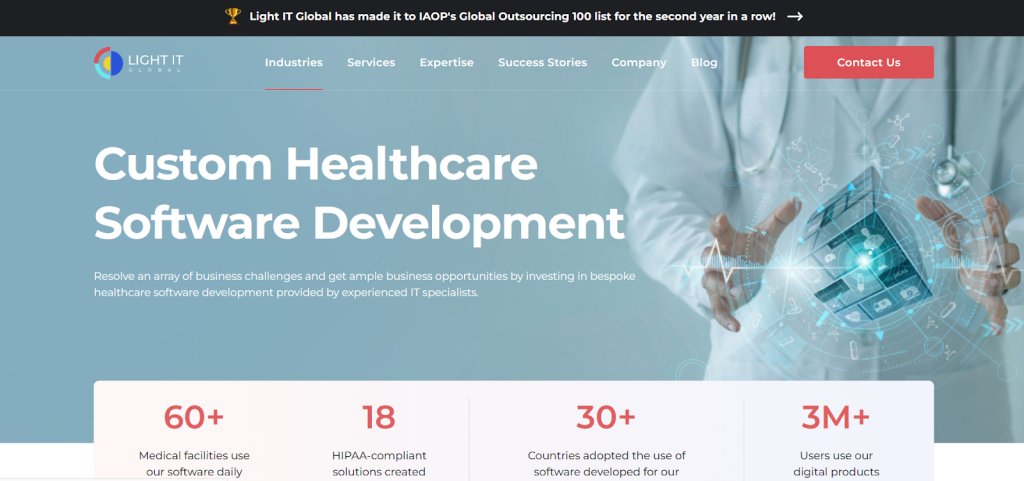
Light IT Global works closely with healthcare startups entering the diagnostics space. Their approach focuses on building lean MVPs that validate diagnostic ideas before committing to large-scale development.
By prioritizing transparency and cost control, Light IT helps early-stage teams test assumptions, gather feedback, and scale only when the product proves its value. This makes them a practical partner for startups navigating early regulatory, technical, and market challenges.
Key Capabilities
• Diagnostic data analytics platforms
• Secure cloud deployment
• Cross-border compliance expertise
Cognizant supports healthcare organizations across multiple regions, focusing on digital transformation, AI-driven diagnostics, and interoperable health platforms. Their solutions are designed to handle complex diagnostic data, integrating seamlessly with EHR/EMR systems, labs, imaging devices, and telehealth platforms.
By emphasizing secure cloud infrastructure and compliance with regulations such as HIPAA, GDPR, and regional health standards, Cognizant enables providers to scale diagnostic services while maintaining patient data privacy. Their analytics-driven approach helps clinical teams extract actionable insights from large datasets, improving decision-making and operational efficiency.
With experience delivering enterprise-grade diagnostic platforms and supporting cross-border healthcare initiatives, Cognizant Healthcare ensures organizations can innovate confidently while meeting both technical and regulatory requirements.
Choosing between healthtech software development companies is not about rankings alone or surface-level technical capabilities. It requires a deep understanding of clinical context, data sensitivity, regulatory pressure, and the realities of how diagnostic workflows function in everyday care settings. What works in theory often fails in practice if systems are not designed around clinicians, patients, and operational constraints.
As highlighted in Forbes’ analysis of digital healthcare transformation, sustainable diagnostic innovation is built on trust, interoperability, and long-term architectural thinking rather than short-lived technological trends. Diagnostic platforms must integrate seamlessly with existing systems, protect sensitive medical data, and remain reliable as regulations, data volumes, and care models evolve.
The agencies listed above stand out because they approach diagnostics as a responsibility, not just a technical challenge. They recognize that every architectural decision can affect clinical outcomes, operational efficiency, and patient safety. This mindset is what ultimately separates functional diagnostic systems from those that truly support modern healthcare delivery.
Diagnostics sits at the core of modern healthcare, where every decision can influence outcomes, costs, and patient trust. In this environment, technology is not simply a layer of automation — it becomes an active participant in clinical reasoning. Data alone does not improve care; what matters is how reliably, transparently, and safely that data is transformed into insight.
AI-driven diagnostic systems demand a careful balance. They must be fast without being opaque, intelligent without being fragile, and scalable without compromising security or compliance. The role of a healthtech software development partner is therefore not to replace clinicians, but to design systems that support decision-making under real-world pressure — across departments, devices, and data sources.
The companies highlighted in this list demonstrate a clear understanding of that responsibility. Each brings a different strength, from AI-ready architectures and data engineering to UX clarity and regulatory awareness. Together, they reflect how diagnostic platforms are evolving from isolated tools into integrated, learning systems that improve over time.
As healthcare organizations continue to invest in AI-powered diagnostics, the most important question is no longer whether to build such systems, but how — and with whom.
Join Paywall Bypass to unlock premium content with integrity. Explore transparent, ethical ways to access valuable information and support content creators.